
community mathematics
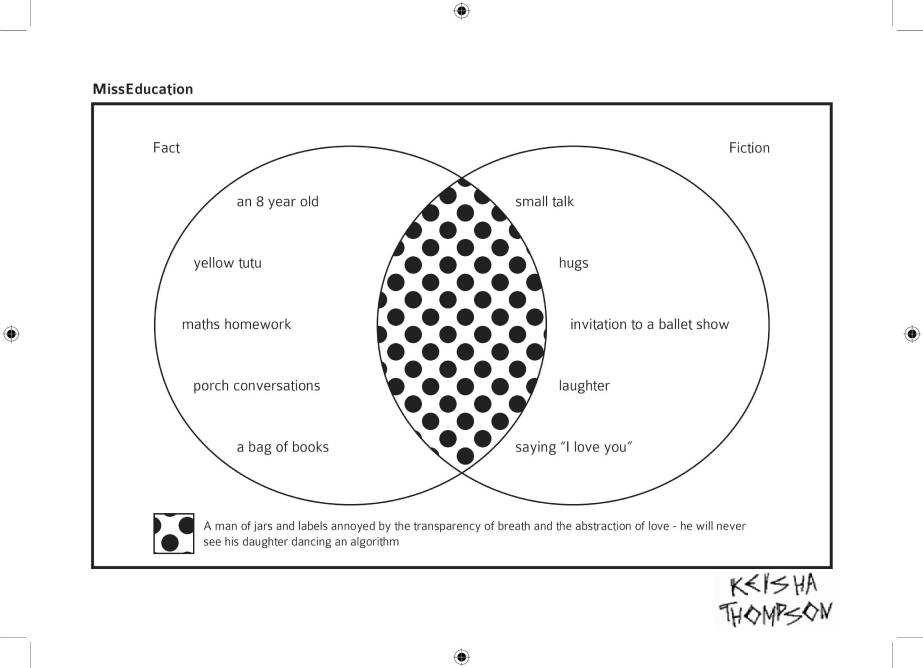
Proposal:
Mathematics is commonly thought of as universal and unchanging. This project challenges this notion by asking about ‘very local’ cultures of mathematics. Engaging with mathematics as an eventful and material practice, it draws on methods from the arts and social sciences to explore, activate, and enrich the mathematical communities that surround the University of Manchester. It asks: How is mathematics lived, performed – even sung, danced, and played – in the homes, businesses, and green spaces of Chorlton-on-Medlock? What affective and aesthetic currents makemathematics in Hulme and Ardwick?
This Manchester-based pilot will trial and evaluate an arts-engaged and youth-led methodological approach to researching local mathematical cultures. Supporting the development of a large grant proposal to the AHRC/ESRC (backup–Leverhulme) in Autumn 2025, it proposes to:
- Develop a youth-participatory approach to mapping and archiving ‘minor’ mathematical practices
- Document and research artist-mathematician collaborations through the production of ‘making-maths’ events (see example below)
- Establish an interdisciplinary framework for integrating the methods of community art, post-qualitative research, and mathematical inquiry
- Grow our Manchester collaborations (e.g. current work with the Ahmed Iqbal Ullah RACE Centre) and expand our network of national and international academic partners
- Generate a range of discipline-crossing impact materials
Rationale, context and methods:
School mathematics has long sounded a death knell for most forms of mathematical creativity and joy. As high-stakes assessments continue to detrimentally divert instructional time from active, collaborative, and creative projects, mathematics curricula in many UK schools have become more and more isolated from interdisciplinary possibilities (Singh et al., 2012; Wearmouth, 2008). The harmful effect of this isolation is easily felt in the vast numbers of UK secondary students who opt out of post-16 mathematics courses (Thomson, 2023). Given the UKs growing need for a high-skilled STEM workforce – not to mention everyday matters related to understanding health outcomes or other forms of data analysis – revitalizing pleasurable, meaningful, and generative relationships to mathematics is paramount. This is especially true for underserved and oppressed communities, where the alienating effects of mainstream mathematical cultures are felt most severely (Ladson-Billings, 1997; Watson et al., 2014). There is a vital need to rehabilitate and celebrate mathematical practices that exceed the compartmentalized, exam-driven nature of state-sanctioned curricula.
We are interested in finding new ways to transform the culture of mathematics in schools by working from the ‘outside’. Inspired by the British community arts movement, which was similarly critical of 1960s art schools for their detachment from people’s everyday concerns, our project will explore the speculative concept of the ‘community mathematician.’ Drawing on key tenets and methods from community arts practice and youth work (Matarasso, 2018), this project explores affective and aesthetic approaches to mathematical knowing (Sinclair, 2018; de Freitas et al. 2019) through three interlinked strands of methodological innovation. The project will:
1) Support a team of 5-8 youth researchers to investigate ‘very local’ mathematical practices and inquire about the concept of ‘community mathematics.’ As a first vein for this inquiry, members of the group will be encouraged to think about themselves as ‘community mathematicians.’ Over the course of five months, the team will develop an archival and/or performance projects related to a local mathematical culture.
2) Document and research two artist-mathematician collaborations which fuse contemporary mathematical research with artistic engagements with materials, bodies, and social praxis. These collaborations will produce ‘making-maths events,’ which will be trialled by our youth researchers.
3) Develop a wider network of UK-based collaborators through a ‘festival review.’ Modelled on a literature review, this will map and analyse regional, national, and international cultural spaces for mathematics. By sharing from our project inside this network, we will build collaborations for the larger grant proposal.
The novel methodologies of this project disrupt elitist images of mathematics by recasting it as a creative, collaborative, and social practice. Our interdisciplinary approach sets out to spawn the generative tensions needed to produce new mathematical concepts, new works of art, and new forms of social engagement (e.g. Haraway, 2016; Wertheim, 2007). Although past education researchers have investigated the everyday mathematics of street vendors and housewives, the everyday mathematics of our era is that of climate-emergency, asylum seeking, and Brexit. Supporting vibrant educational futures and its attendant policies means that we need to know more about how mathematical creativity operates beyond the arbitrary confines of schooling.
References:
de Freitas, E., Ferrara, F., & Ferrari, G. (2019). The coordinated movements of collaborative mathematical tasks: The role of affect in transindividual sympathy. ZDM, 51(2), 305-318. https://doi.org/10.1007/s11858-018-1007-4
Haraway, D. (2016). Staying with the trouble: Making kin in the Chthulucene. Duke University Press. https://doi.org/10.1215/9780822373780
Ladson-Billings, G. (1997). It doesn’t add up: African American students’ mathematics achievement. Journal for Research in Mathematics Education, 28(6), 697–708. https://doi.org/10.2307/749638
Matarasso, F. (2018). A (very short) history of the British community arts movement. https://arestlessart.com/2018/03/08/a-very-short-history-of-the-british-community-arts-movement/
Sinclair, N. (2018). An aesthetic turn in mathematics education. In E. Bergqvist, M. Osterholm, C. Grangerg, & L. Sumpter (Eds.), Proceedings of the 42nd Conference of the International Group for the Psychology of Mathematics Education, Vol 1 (pp. 51-66). PME.
Singh, A., Uijtdewilligen, L., Twisk, J. W., van Mechelen, W., & Chinapaw, M. J. (2012). Physical activity and performance at school: A systematic review of the literature including a methodological quality assessment. Archives of pediatrics & adolescent medicine, 166(1), 49–55. https://doi.org/10.1001/archpediatrics.2011.716
Thomson, D. (2023). Could there be demand for more post-16 maths? FTT Education Datalabhttps://ffteducationdatalab.org.uk/2023/01/could-there-be-demand-for-more-post-16-maths/#:~:text=Overall%2C%20around%2034%25%20of%20pupils,least%20some%20of%20the%20difference.
Watson, C.E., Johanson, M., Loder, M., & Dankiw, J. (2014). Effects of high-stakes testing on third through fifth grade students: Student voices and concerns for educational leaders. Journal of Organizational Learning and Leadership, 12(1), 1-11.
Wearmouth, J. (2008). Testing, assessment and literacy learning in schools: A view from England. Curriculum Perspectives, 28(3), 77–81. http://hdl.handle.net/10547/224189
Wertheim, M. (2007). A field guide to hyperbolic space: An exploration of the intersection of higher geometry and feminine handicraft. The Institute for Figuring.
 Verylocalmaths.org.uk